Choosing a scale is an important decision when starting a new model railroad. There are several scales available, including N, HO, O, and Z. Each scale has its own advantages and disadvantages. When choosing a scale, it is essential to consider the available space, the intended purpose of the layout, and whether you want to do operations on your layout or just sit and watch the trains run.
Find your own space
One of the first things to consider when starting a new model railroad is the space available for the layout. It’s best to find a spot to put your railroad first and then determine what scale can fit in that area. This will ensure that the layout fits the space and avoids problems that could arise from trying to fit a larger scale in a small space. It’s also a good idea to have a rough idea of what type of track plan you want to eventually end up with, so you can measure the space to ensure that the scale has a realistic look and there is enough room for scenery, tracks, and buildings.
When starting out, it’s also a good idea to think about what features you want to include in your layout; some examples include a double-track mainline, turntables, yards, or other unique features. This will help in determining the appropriate scale size that can fit these features while still leaving enough space for buildings, roads, grass, trees, and other essential elements of the model. By keeping these features in mind, you can design a layout that best suits your interests and needs.
It’s best to use as much space as possible so you can have fun operations, but also be considerate to those you live with. Consider the layout’s impact on the rest of the house, especially if you share living space with others. Space restrictions can become an issue if the layout is too big, as you not only need space for benchwork but also a work area for building models, soldering, etc., so it’s best to keep all this in mind when choosing a scale.
Go Large?
While many find the larger scales more fun and realistic, you typically need a really large space. Larger scales, such as O scale, are popular among model railroaders because of their realistic appearance, historic significance, and availability of items. However, these scales require a significant amount of space to accommodate the larger equipment, buildings, and track curves. For those with limited space, smaller scales like N or Z scale can provide a more comprehensive layout in a smaller area.
Let’s take a look at the four scales most commonly used in North America:
- HO scale: This is the most popular scale among model railroaders, with a ratio of 1:87. HO scale models are larger than N scale models, making them easier to work with and handle. HO scale allows for a good balance between detail and space requirements, and it’s an excellent choice for those with moderate space. HO scale layouts require around 4ft x 8ft of space.
- N scale: This is the 2nd smallest scale among the four, with a ratio of 1:160. It’s a popular choice for those with limited space or for those who want to model longer trains. N scale equipment is generally more delicate, but the smaller size allows for more intricate layouts and more realistic scenery. N scale layouts can fit in a space as small as 2ft x 4ft.
- O scale: O scale has a ratio of 1:48 and is a larger scale compared to N and HO. It was one of the original model scales and is popular among collectors and those who want to model a more realistic environment. O scale equipment and buildings are generally more substantial and detailed, but they require more space to accommodate the larger equipment and track curves. It can be easier to work with the larger equipment because it is more durable, so there is less chance of breaking tiny pieces. O scale layouts can require up to 8ft x 10ft of space or more.
- Z scale: This is the smallest scale among the four, with a ratio of 1:220. Z scale models are tiny, making them perfect for those with limited space or those who want to create a more intricate layout. Z scale layouts can fit in a space as small as 1ft x 2ft. However, the small size of Z scale models can be challenging to work with, and the equipment may be more delicate. If you attend a train show, you may see some portable Z scale layouts, even in a briefcase.
Modular
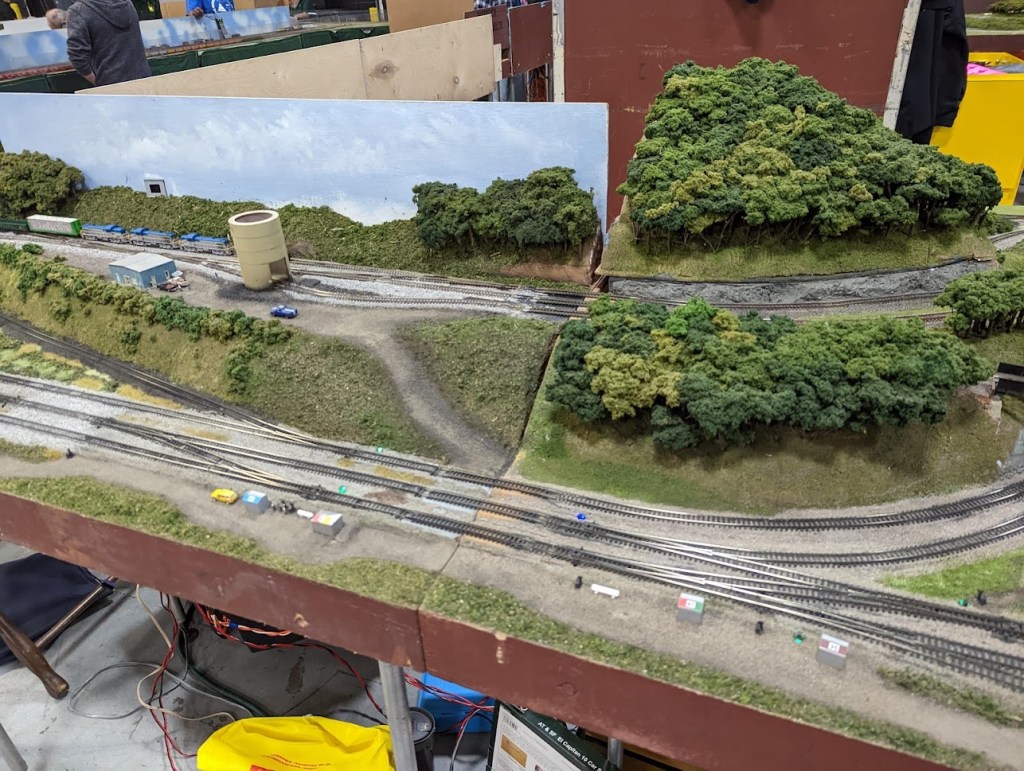
Another consideration when choosing a scale is the ability to expand or modify the layout in the future. You can think about making your layout modular so you can add on in the future. The NMRA (National Model Railroad Association) has standards for creating modules, which allow for easy expansion of the layout by using pre-defined track spacing and connections. A modular layout also allows you to connect your layout with other modelers to build even larger layouts, maybe even as part of a local club.
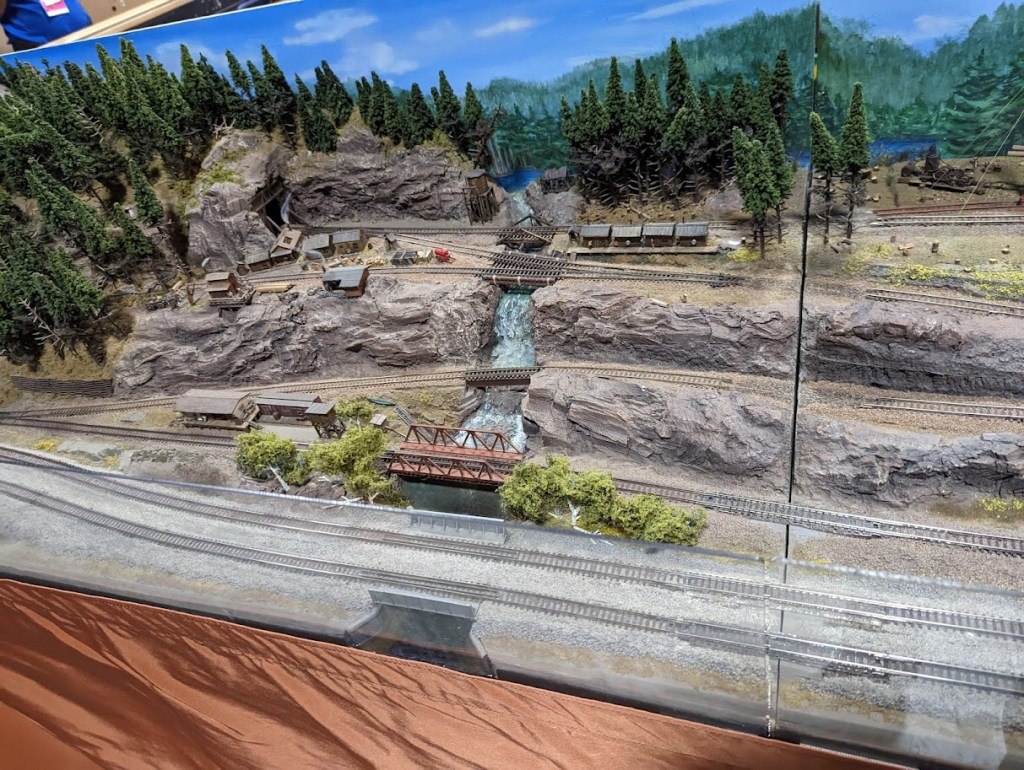
You can see above some examples of modular layouts; these were built by a NJ-based club, and they setup the display at a local train show. By laying the track at fixed intervals and using electrical connectors, they can transport the individual pieces separately and then put together an impressive layout for all to see.
In conclusion, choosing a scale for a model railroad is a significant decision that should be made after careful consideration of the available space, the intended purpose of the layout, and the potential for future expansion. It’s best to find a spot to put your railroad first and then determine what scale can fit in that area. Remember to use as much space as possible while being considerate of those you live with. While larger scales may be more fun and realistic, they require more space, and smaller scales may be a better fit for those with limited space. Additionally, consider making the layout modular, which will allow for easy expansion and modification in the future.
 My Model Railroad